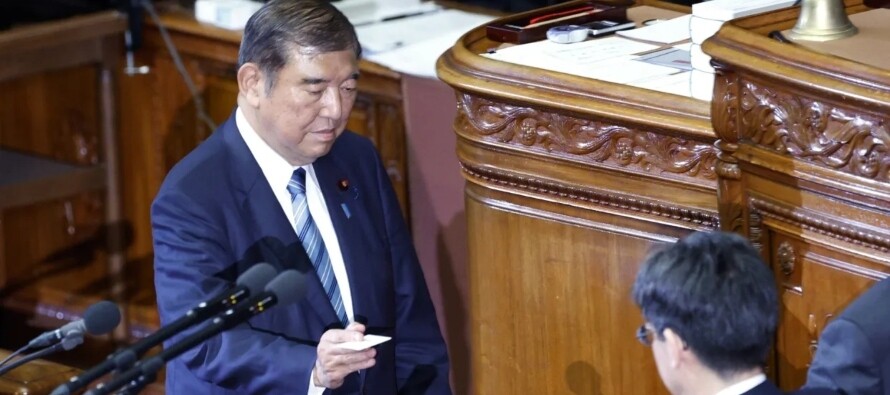
The House of Representatives of Japan re-elected Shigeru Ishiba as Prime Minister last Monday, thanks to the simple majority of the ruling coalition, despite losing the absolute majority in the recent elections. Ishiba received 221 votes in favor out of a total of 465 seats in the House of Representatives, in the second round of voting where he competed against Yoshihiko Noda, the opposition leader, who received 160 votes.
The current Japanese leader, Ishiba, is now at the head of a government in a vulnerable position compared to his previous term when Ishiba's Liberal Democratic Party (LDP) and Komeito had a wide absolute majority. Ishiba will lead the first minority government in Japan in about three decades and, for the first time in thirty years, two rounds of voting in the House of Representatives were needed to elect the Prime Minister.
The elections held on October 27, called by Ishiba after winning his party's primaries, reflected an unusual and uncertain political landscape in Japan following the LDP's defeat, which has governed almost uninterruptedly since 1955. Ishiba took over the leadership of the LDP amid a leadership crisis and scandals, including one of corruption that influenced the loss of voter support.
Despite promises of reform and honesty, and his government team consisting of veteran and continuity figures, Ishiba failed to regain the confidence of voters, and the LDP achieved its worst result since 2009. The coalition under Ishiba's leadership will need support from other parties to push key legislative initiatives and has already begun negotiations with conservative or center-right formations in that regard.
Nevertheless, the greater representation achieved by parties like the People's Democratic Party allows them to better position themselves to oppose the government from the opposition or to pressure it to consider their proposals, which will mark the legislature for the new government.