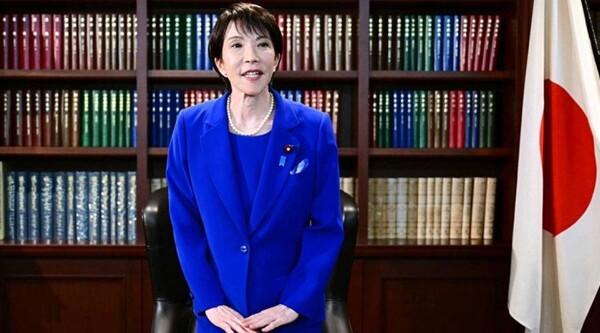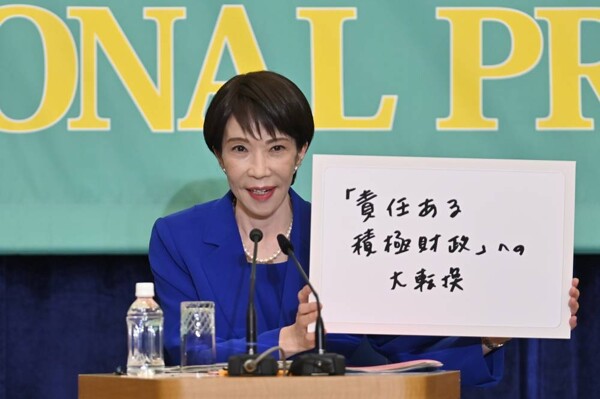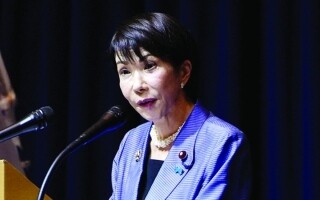
Sanae Takaishi has presided over one of the most successful Japanese prime ministerial inauguration ceremonies in recent memory. Backed by her humble background and status as the first woman to hold the post, and amplified by intensive media coverage of coalition talks that led to the entry of the 'Nippon Ishin no Kai' party, the Japanese public views her rise as a comprehensive shift in Japanese politics, even though the Liberal Democratic Party, which is struggling to regain its strength, remains in power.
This perception is reflected in recent opinion polls tracking approval ratings for Takaishi's administration, which show major surveys indicating a significant surge in her support. A CNN poll revealed an astounding 82% approval rating, a stark contrast to her two immediate predecessors, who barely managed majority support at the start of their tenures, only to see those numbers dwindle rapidly.
The CNN poll, which gave Takaishi the second-highest approval rating among prime ministers in the last two decades, was released following a flurry of diplomatic activity, suggesting that her strong international presence may have already boosted high public expectations.
A Diplomatic Tour
On her first trip abroad, Takaishi visited Malaysia for the ASEAN Summit, then returned to Tokyo to host U.S. President Donald Trump as a guest of honor, showcasing a talent akin to former Prime Minister Shinzo Abe in persuading the mercurial president with symbolism and substance.
Finally, she concluded her first diplomatic tour by attending the Asia-Pacific Economic Cooperation (APEC) forum leaders' meeting in South Korea, where she reassured the host nation's leader, Yoon Suk Yeol, as well as Chinese President Xi Jinping, that she is not an extreme nationalist.
Although all these diplomatic engagements were scheduled before she took office, these occasions provided Takaishi with an opportunity to demonstrate her capabilities, and she handled the opportunity with caution.
Tax Cuts
Despite concerns from experts about Takaishi's ability to mediate, her statements on tax cuts suggest she is capable of doing so, at least for now. Regarding consumption tax cuts, Takaishi initially criticized the previous leadership for refusing to consider such reductions, but has since softened her stance, stating in a parliamentary speech that implementing such cuts would be impossible.
Takaishi's 'Growth Strategy' committee was composed of distinguished professionals, unlike the figures previously associated with her as advocates of Modern Monetary Theory.
Even on historical memory issues, she has softened her rhetoric. In response to a question from an opposition member, she stated that her government affirms the Murayama Statement, which expressed remorse for Japan's wartime actions—a statement Takaishi herself had previously questioned as a parliament member.