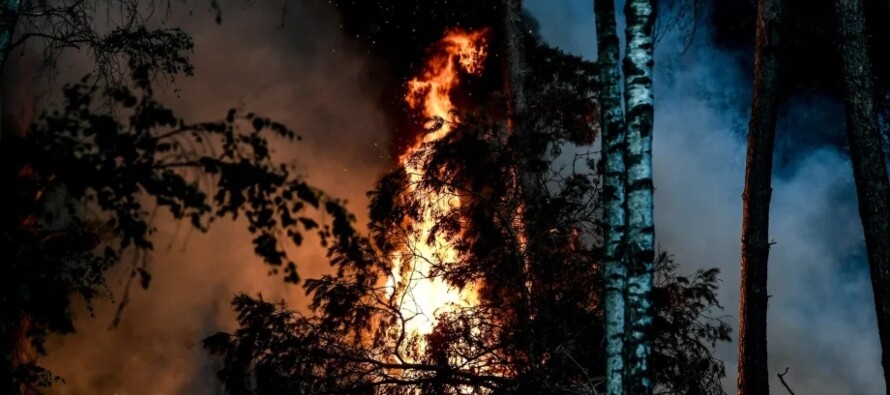
Climate change is having an increasing impact on the frequency and intensity of wildfires worldwide, leading to greater smoke emissions that worsen air pollution and pose risks to public health in urban areas. Each year, more than 98,748 people die from exposure to wildfire smoke, according to studies published in Nature Climate Change and led by the Potsdam Institute for Climate Impact Research PIK.
The first study notes that between 2003 and 2019, the globally burned area due to climate change increased by 15.8%. This trend has been particularly observed in regions such as Australia, South America, the western United States, and Siberia. It highlights that this increase in the area burned by wildfires has countered the decrease noted due to changes in land use and the rise in population density in recent years.
On the other hand, the second study examines the relationship between climate change and the global rise in deaths related to air pollution caused by wildfires. It reveals that deaths associated with air pollution generated by wildfires have risen from 669 annually in the 1960s to more than 12,500 in the 2010s. Notably, these deaths have increased significantly due to climate change, showing a growing threat to public health.
Wildfire smoke contains tiny particles that pose a serious health risk by penetrating the respiratory system and causing lung and respiratory diseases. Regions such as South America, Australia, and Europe have experienced significant increases in mortality due to wildfires attributable to climate change, reflecting the warmer and drier conditions generated by global warming.
Despite climate change increasing the risk of wildfires by reducing humidity and raising temperatures, some places like South Asia have seen fewer deaths attributed to wildfires due to an increase in humidity. Researchers emphasize that the influence of climate change on dry and warm weather conditions is increasingly relevant, which increases the area burned by wildfires in various regions of the planet and worsens air pollution, representing a risk to the health of the population.