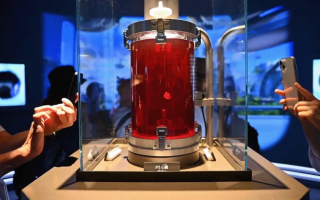
After decades of searching for an alternative heart that could save cardiac patients from long waiting lists for a suitable donor, Osaka University in Japan has achieved a result from years of research. Scientists used stem cells taken from the patient's own tissues to grow a replacement heart the size of a ping-pong ball.
This achievement dates back to 2012, when Dr. Shinya Yamanaka won the Nobel Prize for discovering the technique to reprogram ordinary cells into induced pluripotent stem cells (iPSCs), which paved the way for this project. The project was later led by Japanese cardiologist Yoshiki Sawa from Osaka University, who invested years of his research into making the dream of a self-transplanted heart a reality.
The process begins with taking a small sample of the patient's heart cells. These cells are reprogrammed to become induced pluripotent stem cells and then, using precise biological signals, are directed to transform into cardiomyocytes (heart muscle cells).
These cells are assembled into a three-dimensional structure to form a miniature heart tissue, which is placed in a warm, nutrient-rich solution and begins to beat on its own, much like a living heart in its developmental stage.
This discovery offers hope to thousands of patients who die while waiting for a suitable donor or suffer from organ rejection and are forced to use immunosuppressive drugs for life. A heart grown from the patient's own cells avoids these risks, as it is made from the patient's own tissue and is accepted by the body without rejection.
Currently, the company 'Cyorb', led by Yoshiki Sawa, is conducting clinical trials to implant patches of this heart tissue into patients' chests. Initial results have shown that these patches act as living 'band-aids' that reactivate the weakened heart muscle and help it regain some of its function.
However, the road from a ping-pong ball-sized heart to a fully implantable human heart is still long. The biggest danger is that these cultivated cells could turn into cancerous tumors if not carefully monitored. There are also challenges related to synchronizing the electrical rhythm of the implanted tissue with the patient's natural heartbeat, which could cause serious disturbances in the cardiac nervous system.
Despite the amazing progress, the natural heart still outperforms it with its superior ability to pump and regulate. It pumps 5 liters of blood every minute with incredible precision through valves and chambers working in perfect harmony, something laboratory experiments have not yet been able to fully replicate.
Therefore, scientists are working on developing a network of fine blood vessels within the engineered tissues using 3D bioprinting to create a heart with precise anatomical structure. They are also developing biological stimulators that mimic the natural environment inside the human body.