


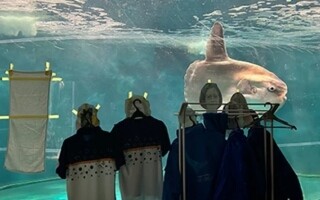
The aquarium in Japan found a creative solution for dealing with a lonely fish, which felt isolated due to the absence of visitors because of the renovation. The administration of the Kaikokan aquarium in Shimonoseki reported that after the facility's closure for reconstruction in December of last year, "the sunfish became lonely." They were unable to determine the reason and adopted various measures, but one of the staff members stated: "Perhaps it feels lonely because it doesn't get enough visitors!".
Staff noticed that as soon as the visitors stopped coming, the fish began to stop eating jellyfish and started to rub against the aquarium, leading to suspicions that it was having problems with its feeding system or parasites, reported the Japanese newspaper "Mainichi Shimbun". The sunfish resides in the open sea in temperate and tropical regions around the world and can grow impressively, reaching a weight of up to 1900 kg and a length of up to 3.3 m.
Another Japanese aquarium found a similar creative solution to help the animals acclimatize to human interaction. They attached artificial faces to glass in front of the aquarium to mimic the sunfish, which is a favorite and swims towards the front side of its habitat when people arrive, according to their judgment. Despite the fact that the administration was not initially convinced, they adopted this attention and came up with a quick solution and soon saw the difference; the next day it felt good again!
In a photo, published aquarium, you can see the sunfish swimming, and one of its eyes is directed at "people," made from faces carved out of cardboard and attached to stands in front of the glass. During the closure due to COVID-19 in 2020, the Marine Life Center in the Sumida area of Tokyo requested volunteers to conduct video calls via FaceTime with 300 pythons, which had become stranded without visitors, making it difficult to monitor their condition, reported staff.