


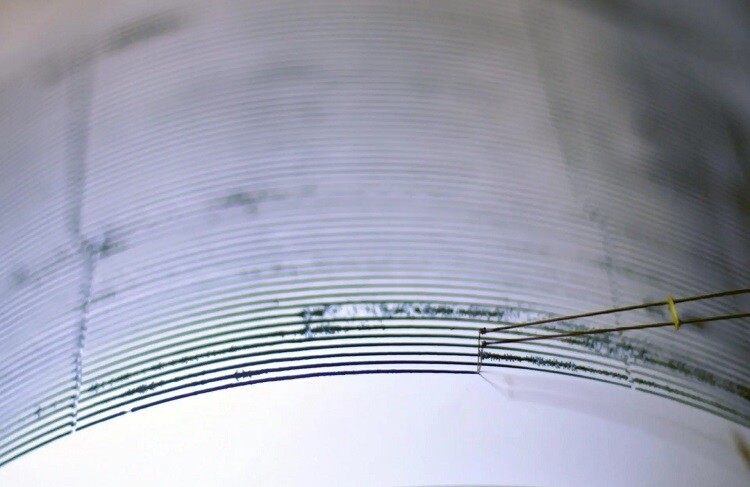
A magnitude 7.6 earthquake struck northern Japan on Monday, prompting the Japan Meteorological Agency (JMA) to issue a tsunami warning of up to 3 meters and urging the evacuation of over 13,000 people. So far, there have been no reports of injuries or damage.
The tremor occurred at 11:15 p.m. local time (2:15 p.m. GMT) off the coast of Aomori Prefecture in the northeast of the archipelago, with its epicenter at a depth of 50 kilometers, according to meteorological authorities.
In the city of Hachinohe, the quake reached an upper 6 on Japan's 7-level seismic intensity scale, which measures shaking on the surface and potential destructive force. It also registered a lower 6 in the towns of Oirase and Hashikami.
According to public broadcaster NHK, without providing details, several people were injured in a hotel in Hachinohe.
The earthquake was felt across much of the country, from the north to the central and eastern regions, including Tokyo, where it reached a magnitude of 2 on the national seismic scale.
Tsunami warning of up to 3 meters in height
The JMA activated a tsunami warning of up to 3 meters in height for the coast of Aomori Prefecture, neighboring Iwate, and the southern tip of Hokkaido, the northernmost island in the archipelago.
The agency confirmed the arrival of the first tsunami wave, about 40 centimeters high, at Mutsu-Ogawara Port in Aomori at 11:43 p.m. local time (2:43 p.m. GMT), and a similar wave at Urakawa Port in Hokkaido seven minutes later.
A tsunami warning of up to one meter was also issued for Miyagi and Fukushima prefectures, as well as for the southern coast of Hokkaido. A minor alert for possible tidal changes was issued for all Pacific coastlines, where authorities urged people to stay away from the coast.
According to initial data from authorities, around 23,000 people in Hokkaido, Iwate, and Miyagi prefectures were urged to evacuate to shelters due to the tsunami risk.
Japanese Prime Minister Sanae Takaichi formed a special task force to monitor the situation and instructed relevant agencies to "immediately provide appropriate information to the public and take measures to prevent damage," according to her statements to the press upon arriving at the Kantei, the government headquarters in Tokyo.
"The government is working closely with local authorities to take appropriate disaster measures, prioritizing human lives," the leader stated in comments broadcast live by NHK.
Tohoku Electric Power, the operator of the two nuclear plants in the hardest-hit area—Higashidori and Onagawa—is checking the status of the facilities. No anomalies have been reported so far, stated government spokesman Minoru Kihara.
The main earthquake was followed by successive aftershocks, including a magnitude 5.6 quake, two of magnitude 3.6, and one of magnitude 3.9 within the hour.